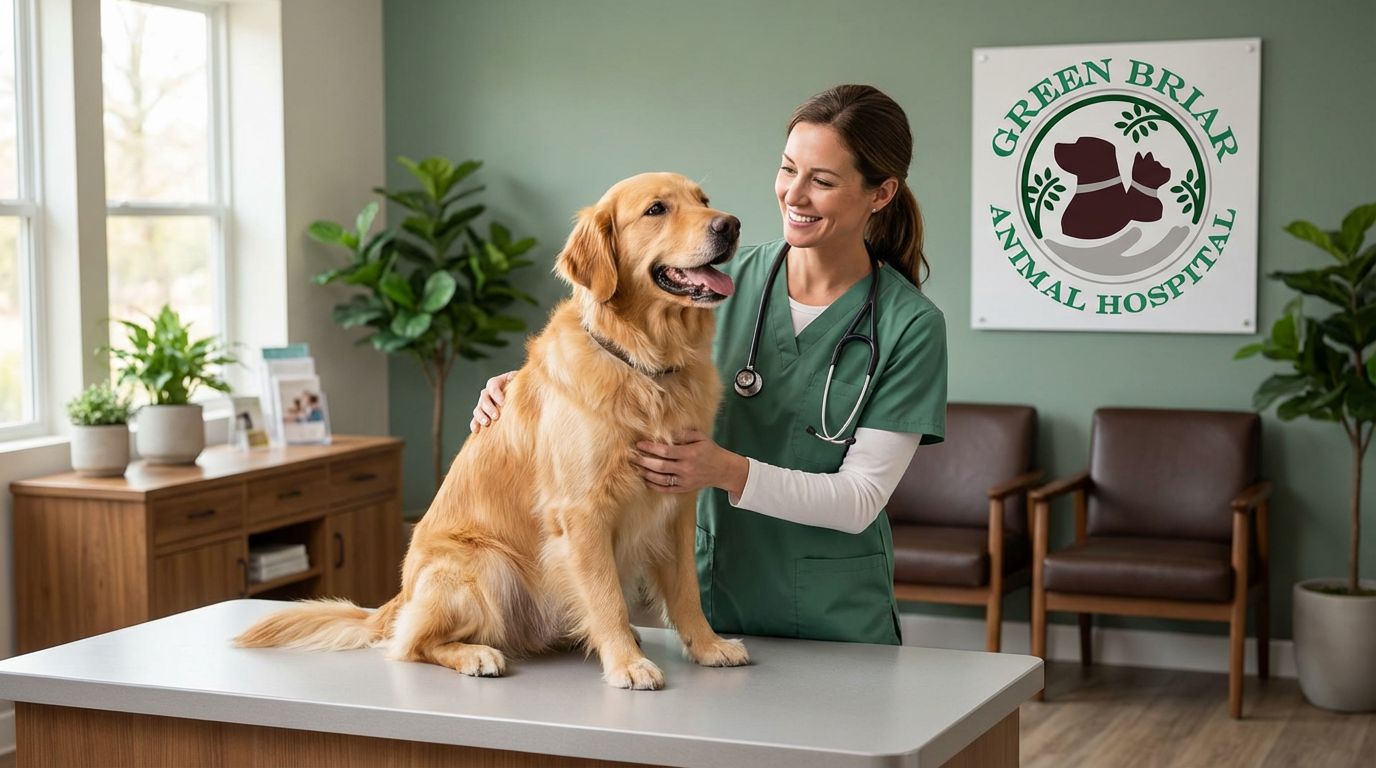
We all understand the importance of seeing a doctor for our own yearly physical — but did you
know your pet needs the same level of preventive care? Pets age faster than humans, and even
subtle changes in their health can happen quickly. Scheduling annual veterinary checkups is
one of the most important things you can do to keep your furry family member healthy,
comfortable, and happy.
At Greenbriar Animal Hospital, we treat every pet like a member of the family. Here’s why
those yearly visits are so essential to your pet’s lifelong health and well-being.
1. Early Detection Saves Lives
Pets are experts at hiding pain and illness. By the time symptoms are obvious, a condition may
already be advanced. During an annual exam, your veterinarian can spot early warning signs
through:
• Physical exams of the skin, eyes, ears, and mouth
• Listening to heart and lungs for abnormalities
• Checking for lumps, swelling, or stiffness
• Running basic lab tests for organ function
Detecting issues like kidney disease, diabetes, dental infections, or thyroid problems early
means faster treatment and a better outcome for your pet.
2. Vaccinations Keep Your Pet and Community Safe
Vaccines aren’t just for puppies and kittens — they’re vital for adult pets too. Over time,
immunity can fade, leaving your pet vulnerable to diseases such as rabies, distemper, or
parvovirus.
At each annual visit, your veterinarian reviews your pet’s lifestyle and ensures vaccines are
current and tailored to their needs. Whether your pet lounges indoors or joins you on outdoor
adventures, staying up-to-date on vaccinations protects everyone — including other pets in your
community.
3. Preventing Parasites Year-Round
Fleas, ticks, and heartworms don’t take vacations, and they can strike at any time of year. Annual
visits are a great time to renew prescriptions for parasite prevention and ensure your pet stays
protected from these harmful invaders.
Your vet can recommend the best preventive products for your pet’s size, breed, and lifestyle —
ensuring long-term health with minimal risk.
4. Monitoring Weight and Nutrition
Obesity is one of the most common and preventable health problems in pets. Even a few extra
pounds can lead to joint pain, diabetes, and heart disease.
During your pet’s checkup, your veterinarian will:
• Assess your pet’s weight and body condition
• Discuss portion sizes and diet types
• Recommend the right food for their age and activity level
A healthy diet and proper weight management can add years to your pet’s life.
5. Dental Health Matters More Than You Think
Dental disease is one of the most overlooked conditions in pets. Plaque buildup and gum
inflammation can lead to tooth loss — and bacteria from the mouth can spread to the heart, liver,
or kidneys.
At annual checkups, your vet will check your pet’s teeth and gums for signs of trouble and may
recommend professional cleaning. Regular dental care helps your pet avoid pain and stay healthy
from the inside out.
6. Building a Baseline for Lifelong Health
Routine exams create a medical history that helps your vet spot changes over time. By knowing
what’s “normal” for your pet, subtle shifts in weight, bloodwork, or behavior become easier to
detect and treat early.
This continuity of care builds trust, ensures accuracy, and strengthens your pet’s overall wellness
plan.
Your Pet Deserves the Same Care You Do
Your pet gives you unconditional love — and in return, they deserve proactive, compassionate
care. Annual veterinary checkups are the key to preventing illness, managing aging, and keeping
your furry companion by your side for years to come.
At Greenbriar Animal Hospital, we’re committed to helping your pets live their healthiest,
happiest lives through preventive medicine and personalized care.
As pet parents, we love sharing everything with our furry family members — especially food.
But while it’s tempting to offer a bite of what’s on our plate, many human foods can be toxic or
even deadly for pets. Knowing what’s safe and what’s not can make all the difference in keeping
your dog or cat healthy.
At Greenbriar Animal Hospital, we’re passionate about pet wellness and preventive care. To
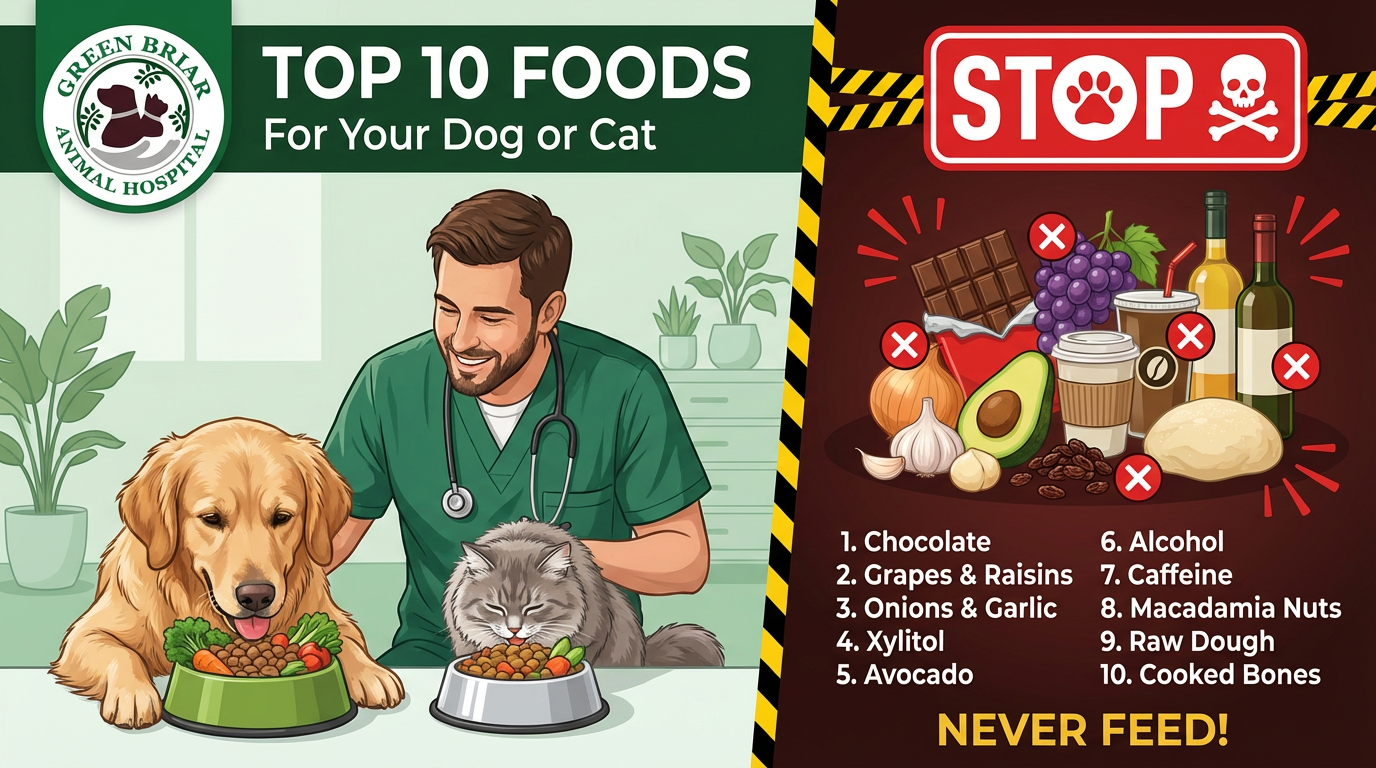
help you protect your four-legged loved ones, here are the top 10 foods you should never feed
your dog or cat — and why.
1. Chocolate
Chocolate contains theobromine and caffeine, two substances that pets can’t metabolize
effectively. Even small amounts can cause vomiting, diarrhea, tremors, seizures, or heart
problems.
Tip: The darker the chocolate, the more toxic it is.
2. Grapes and Raisins
Both grapes and raisins can cause sudden kidney failure in dogs and cats. Symptoms include
vomiting, lethargy, and decreased appetite. Even a single grape can be dangerous, so it’s best to
avoid them entirely.
3. Onions and Garlic
Onions, garlic, leeks, and chives — whether raw, cooked, or powdered — can damage your pet’s
red blood cells, leading to anemia.
Cats are especially sensitive, but dogs can also suffer severe effects over time.
Watch for pale gums, weakness, and fatigue.
4. Avocado
Avocados contain a toxin called persin, which can cause vomiting and diarrhea in dogs and cats.
The pit also poses a choking and intestinal blockage hazard.
While a tiny bit may not cause harm, it’s safest to avoid giving avocado altogether.
5. Alcohol
Even small amounts of alcohol can lead to dangerous drops in blood sugar, blood pressure,
and body temperature.
Pets can become intoxicated quickly, leading to vomiting, seizures, and potentially coma. Keep
all alcoholic drinks — and unbaked dough containing yeast — out of reach.
6. Xylitol (Found in Sugar-Free Products)
Xylitol is an artificial sweetener used in sugar-free gum, peanut butter, and baked goods. In dogs,
it causes a rapid insulin release, leading to dangerously low blood sugar and liver failure.
Even tiny amounts can be fatal. Always read labels carefully.
7. Caffeine
Coffee, tea, soda, and energy drinks contain caffeine, which overstimulates your pet’s nervous
system.
Symptoms of caffeine toxicity include restlessness, rapid breathing, tremors, and irregular heart
rhythm.
There is no safe amount of caffeine for pets.
8. Cooked Bones
Cooked bones, especially chicken or pork, can splinter and cause blockages or tears in the
digestive tract.
If you want to give your pet something to chew, ask your veterinarian for safe alternatives such
as dental chews or specially designed raw bones.
9. Raw Dough
Unbaked dough with yeast continues to rise in a pet’s stomach, causing painful gas, bloating, and
potential intestinal rupture. Additionally, the fermentation process produces alcohol, which can
lead to intoxication.
10. Dairy Products
While it’s a common belief that cats love milk, most pets are lactose intolerant after weaning.
Milk, cheese, and other dairy products often cause upset stomachs, diarrhea, or vomiting.
Stick to fresh water or pet-safe treats instead.
Bonus: Fat Trimmings and Greasy Foods
Table scraps rich in fat can trigger pancreatitis, a painful and potentially life-threatening
condition.
If you want to reward your pet, opt for healthy, vet-approved treats instead of leftovers.
What to Do If Your Pet Eats Something Toxic
If you think your pet may have eaten something harmful, don’t wait for symptoms to appear.
Call Greenbriar Animal Hospital or contact the ASPCA Animal Poison Control Center at
(888) 426-4435 immediately.
Quick action can save your pet’s life.
Healthy Alternatives
Instead of table scraps, try offering:
• Fresh carrots or green beans (for dogs)
• Small pieces of cooked chicken or fish (unseasoned)
• Commercial treats labeled as safe and nutritionally balanced
Your veterinarian can help you choose the best diet for your pet’s age, breed, and health needs.
Keeping Pets Safe Starts at the Table
Our pets trust us to keep them healthy, and that includes protecting them from foods that can
cause harm.
At Greenbriar Animal Hospital, we’re here to help you make informed choices about your pet’s nutrition and overall well-being.
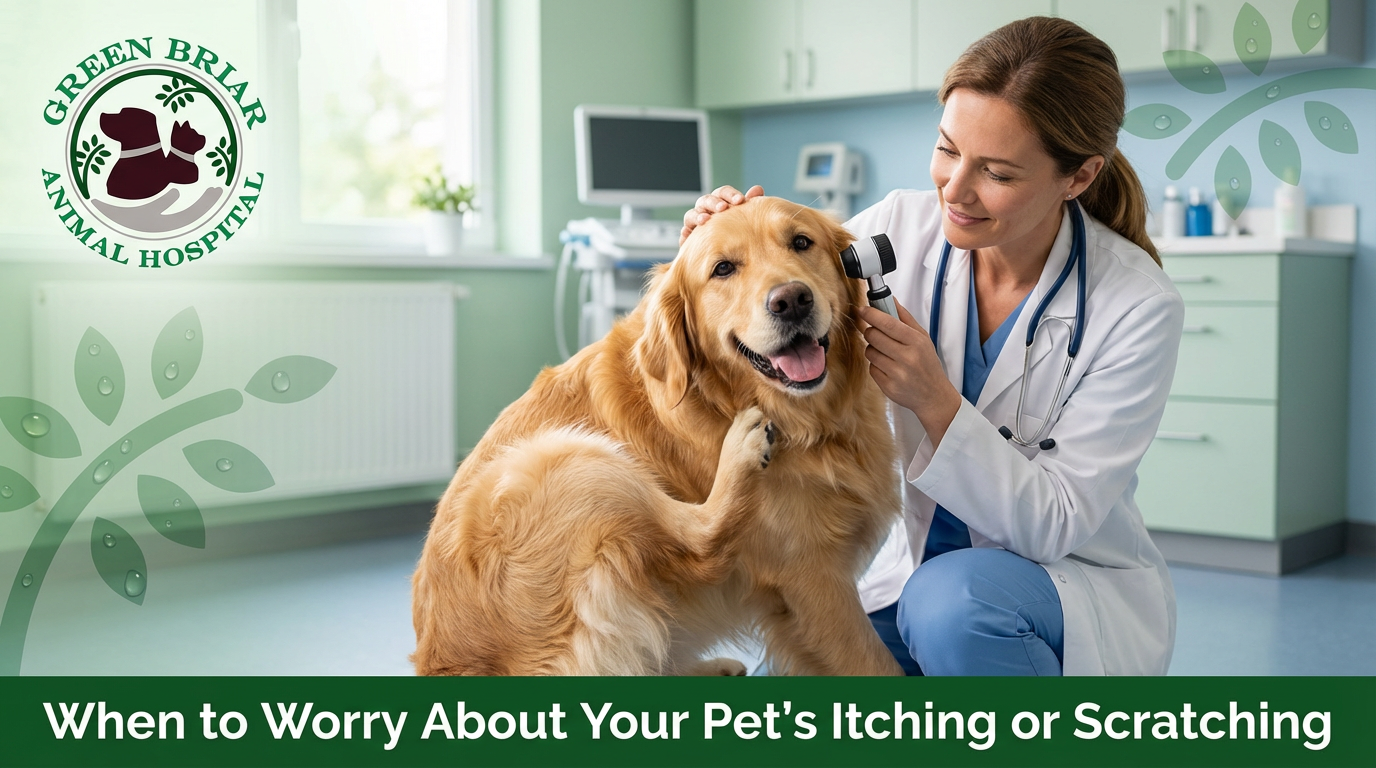
An occasional scratch behind the ear or a quick lick of the paw is perfectly normal for dogs and
cats — but when the scratching becomes constant, it’s time to pay attention. Persistent itching
can be a sign of allergies, skin infections, or other underlying health problems that need
medical care.
At Greenbriar Animal Hospital, we see countless pets each year suffering from skin discomfort
that could have been prevented or easily treated with early attention. Here’s how to tell when
your pet’s scratching is more than just a passing irritation.
1. Occasional Scratching vs. Persistent Itching
Just like people, pets might scratch every now and then. However, if you notice any of the
following, it’s time to call your veterinarian:
• Constant scratching, licking, or biting at the skin
• Hair loss or bald patches
• Red, inflamed, or flaky skin
• Open sores, scabs, or “hot spots”
• Head shaking or frequent ear scratching
• Foul odor coming from the skin or ears
These are clear signs that your pet’s skin is irritated or infected — and it won’t go away on its
own.
2. Common Causes of Itching in Pets
Itching can come from many sources, and figuring out the root cause is the key to effective
treatment. Here are some of the most common reasons pets can’t stop scratching:
Allergies
Just like humans, pets can develop allergies to pollen, grass, dust, or even certain foods.
Environmental allergies often cause seasonal itching, while food allergies may lead to year-round
symptoms such as ear infections or licking the paws.
Fleas and Parasites
Even one flea bite can make a sensitive pet miserable. Fleas, mites, or ticks can cause intense
itching and irritation. If you notice small black specks (“flea dirt”) or red bumps on your pet’s
skin, parasites are a likely culprit.
Dry Skin
Cold weather, frequent bathing, or poor nutrition can lead to dry, flaky skin. While mild dryness
can be managed at home, persistent flaking may signal an underlying imbalance that needs
veterinary evaluation.
Infections (Bacterial or Fungal)
Hot spots, yeast infections, and bacterial skin infections can cause relentless itching, redness, and
odor. These require prescription treatments to resolve fully.
Hormonal or Medical Conditions
Endocrine disorders, such as hypothyroidism or Cushing’s disease, can also cause chronic skin
issues and hair loss. Bloodwork may be needed to rule out these internal problems.
3. Why You Shouldn’t Ignore Itching
Many pet parents think a little scratching is harmless, but over time, excessive licking or
chewing can lead to:
• Open wounds or skin infections
• Chronic ear infections
• Secondary bacterial or yeast growth
• Hair loss and discomfort
The longer the irritation continues, the more difficult (and expensive) it can be to treat. Early
diagnosis not only relieves your pet’s discomfort but also prevents long-term complications.
4. How Vets Diagnose the Cause of Itching
At Greenbriar Animal Hospital, our veterinarians use a combination of diagnostic tests and
visual exams to find out what’s bothering your pet. Depending on your pet’s symptoms, we may
recommend:
• Skin scrapings or cytology (to check for infection or mites)
• Flea combing and parasite screening
• Food or environmental allergy testing
• Blood tests to rule out hormonal issues
Once we know the cause, we can create a custom treatment plan to bring fast relief and prevent
future flare-ups.
5. Treatment Options That Work
Treatment depends on the cause but may include:
• Medicated shampoos or topical creams for infections or irritation
• Flea and tick preventives to eliminate parasites
• Prescription allergy medications or anti-itch injections
• Specialized diets for pets with food sensitivities
• Omega-3 supplements to improve skin and coat health
We tailor every treatment plan to your pet’s age, breed, and lifestyle to ensure long-term comfort.
6. Tips for Preventing Future Itching
You can help protect your pet’s skin year-round by following these tips:
• Keep up with monthly flea and tick prevention
• Bathe your pet with vet-approved, gentle shampoos
• Brush regularly to remove debris and dead hair
• Provide a balanced, high-quality diet
• Schedule regular checkups to catch small issues before they worsen
Healthy Skin, Happy Pet
A little scratching is normal — but if your pet’s itching is keeping them (or you) up at night, it’s
time to take action. The sooner you identify and treat the cause, the faster your pet can get back
to feeling comfortable and carefree.
At Greenbriar Animal Hospital, our compassionate team specializes in diagnosing and treating
skin problems in pets. We’ll help your furry friend find relief and prevent future flare-ups.
If your pet hides under the bed at the sight of their carrier or trembles in the car on the way to the
vet, you’re not alone. Many pets experience stress or anxiety before veterinary visits — and as
loving pet parents, we want to make those trips as peaceful as possible.
At Greenbriar Animal Hospital, we understand that a calm pet makes for a better, safer, and
more positive visit for everyone. With a few thoughtful steps, you can help your furry friend feel
more relaxed and confident before their next appointment.
1. Create Positive Associations Early
The key to reducing vet anxiety is to make the experience feel familiar and rewarding — not
frightening.
Start by introducing your pet to the idea of the vet long before their appointment:
• Take short car rides that don’t end at the clinic.
• Let them sit in their carrier or wear their leash indoors and reward them with treats.
• Occasionally visit the vet’s lobby just to say hello and get a treat — no pokes or
procedures.
Over time, your pet will start associating the vet with good things instead of fear.
2. Practice Calm Handling at Home
Many pets get anxious because they’re not used to being touched in certain ways. At home,
gently handle your pet’s paws, ears, and mouth while offering praise and small treats.
This helps them become comfortable with the same kinds of handling your veterinarian will do
during an exam — like checking teeth, trimming nails, or examining ears.
💡 Tip: Keep sessions short and positive, especially for puppies, kittens, or rescue pets who are
still learning to trust.
3. Use the Carrier as a Comfort Zone (Not a Trap)
If your cat or small dog associates the carrier with stress, try leaving it out as part of your home
environment.
Add a soft blanket, toys, and treats inside so it feels like a cozy den rather than a signal of
something scary.
Spraying the inside of the carrier with pheromone sprays (like Feliway for cats or Adaptil for
dogs) about 15 minutes before travel can also help promote calmness.
4. Stay Calm Yourself
Pets are incredibly sensitive to our energy. If you’re nervous, they’ll pick up on it!
Try to stay relaxed and cheerful on the way to the vet. Speak softly, keep movements slow, and
avoid sounding apologetic or tense — your calm presence reassures your pet that everything is
okay.
💡 Tip: Play soothing music in the car or use a calming pet playlist to create a peaceful
environment during travel.
5. Bring Familiar Comfort Items
A favorite blanket, toy, or even a T-shirt with your scent can help comfort your pet during the
visit.
Having something that smells like home gives them a sense of security in an unfamiliar
environment.
For cats, covering the carrier with a light towel can block visual stressors like other animals or
bright lights.
6. Time the Appointment Wisely
If possible, schedule appointments during quieter times of day, such as mid-morning or early
afternoon.
Fewer pets in the waiting room means less noise, shorter wait times, and a calmer experience
overall.
You can also ask if curbside check-in or waiting in your car until it’s your turn is an option —
some pets feel more comfortable staying with you until the exam.
7. Consider Calming Aids or Supplements
For especially anxious pets, ask your veterinarian about natural calming aids or prescription
options.
These may include:
• Pheromone sprays or diffusers
• Calming treats or supplements
• Short-acting anti-anxiety medications for travel days
Never medicate your pet without veterinary guidance — some human medications can be
dangerous or even fatal for animals.
8. Reward and Praise After Every Visit
When the visit is over, celebrate your pet’s bravery!
Give them a favorite treat, extra cuddles, or a fun walk afterward.
Ending the experience on a positive note reinforces good behavior and helps your pet feel more
confident next time.
A Stress-Free Visit Starts with Preparation
With patience, consistency, and a little planning, you can turn a dreaded vet trip into a calm and
manageable experience.
At Greenbriar Animal Hospital, we strive to make every visit gentle, compassionate, and fear-
free — for both pets and their people.
If your pet struggles with anxiety, let us know ahead of time. We’ll take extra steps to ensure a
soothing experience tailored to your pet’s unique needs.
As pet owners, we all hope our furry companions will stay healthy and safe. But emergencies can
happen at any time—and knowing when to seek urgent veterinary care can make all the
difference in saving your pet’s life. Sometimes, waiting until “tomorrow” is simply too risky.
If you’ve ever searched “emergency vet near me” in a moment of panic, you’re not alone.
Here’s a guide to help you recognize when it’s time to rush your pet to the animal hospital right
away.
Signs Your Pet Needs Emergency Veterinary Care
1. Difficulty Breathing
Any change in breathing—such as wheezing, choking, excessive panting, or gasping for air—is a
medical emergency. Breathing problems may signal choking, heart failure, or a severe allergic
reaction.
2. Uncontrolled Bleeding or Major Injuries
If your pet has been hit by a car, attacked by another animal, or has a wound that won’t stop
bleeding, seek care immediately. Even if they seem “fine,” internal injuries can be life-
threatening.
3. Seizures or Loss of Consciousness
A single seizure should be taken seriously, but multiple seizures in a short time or any loss of
consciousness is an urgent emergency. These symptoms may indicate poisoning, neurological
conditions, or other critical issues.
4. Ingestion of Toxins
Pets are curious, and sometimes curiosity leads to trouble. If your dog or cat ingests chocolate,
antifreeze, medications, plants, or other toxic substances, rush them to the vet right away. Time
matters—early treatment is often the difference between life and death.
5. Severe Vomiting or Diarrhea
While occasional stomach upset is common, repeated vomiting, bloody diarrhea, or signs of
dehydration should never be ignored. These symptoms can indicate poisoning, blockages, or
infections.
6. Trauma, Falls, or Accidents
Even if your pet appears to bounce back after a fall or accident, unseen injuries could be present.
Fractures, internal bleeding, or organ damage may not show immediate symptoms. A vet exam is
always necessary after serious trauma.
7. Struggling to Urinate or Defecate
Straining to urinate, crying out in pain, or producing little to no urine can be life-threatening,
especially for male cats. Blockages can quickly lead to kidney failure if left untreated.
8. Sudden Weakness or Collapse
If your pet suddenly collapses, seems unable to stand, or becomes extremely weak, don’t wait.
These signs may be related to heart disease, heatstroke, or internal bleeding.
9. Eye Injuries
Pets with sudden eye swelling, cloudiness, or trauma should see a vet immediately. Eye injuries
can worsen quickly and may lead to blindness if untreated.
10. Heatstroke or Overheating
Excessive panting, drooling, weakness, or collapse during hot weather may be signs of
heatstroke—a condition that can become fatal within minutes. Immediate veterinary care is
critical.
Trust Your Instincts
If something feels wrong, it probably is. You know your pet’s normal behavior, and sudden
changes should never be ignored. In emergencies, it’s always better to be safe than sorry.
At Green Briar Animal Hospital, our team is here to provide compassionate and urgent care
when your pet needs it most. If you’re searching for an “emergency vet near me”, don’t hesitate
—call us right away or bring your pet in. Acting quickly could save your best friend’s life.
Long sunny days mean more time outdoors with our furry friends — from backyard barbecues to
trips to the lake. But just like humans, pets can easily become overheated or dehydrated in the
summer months.
At Greenbriar Animal Hospital, we want your pets to enjoy summer safely and comfortably.
Here are some expert-approved tips to help keep them cool, hydrated, and protected all season
long.
1. Always Provide Fresh, Cool Water
Dehydration can happen fast in warm weather. Make sure your pet has constant access to clean,
cool water — both indoors and out.
• Refill water bowls several times a day.
• Bring a portable water bottle or collapsible bowl on walks or outings.
• Add ice cubes to their bowl for an extra chill on hot afternoons.
💡 Tip: If your pet isn’t drinking enough, try flavored pet hydration products or low-sodium
chicken broth ice cubes to encourage more water intake.
2. Never Leave Your Pet in a Parked Car
Even with the windows cracked, temperatures inside a parked car can skyrocket in minutes —
easily reaching over 120°F (49°C).
Pets can suffer heatstroke, organ failure, or death in a matter of minutes.
If you need to run errands, it’s safest to leave your pet at home in the air conditioning.
3. Limit Exercise During Peak Heat
Pets don’t sweat the way humans do; they release heat primarily through panting and their paw
pads.
To prevent overheating:
• Walk your dog early in the morning or late in the evening when it’s cooler.
• Avoid midday sun (10 a.m. – 4 p.m.).
• Bring water and take frequent breaks.
If your pet starts panting heavily, drooling, or slowing down, stop immediately and find shade
or air conditioning.
4. Protect Those Paws
Hot pavement, sand, and asphalt can burn your pet’s paws.
Before heading out, test the ground — if it’s too hot for your hand, it’s too hot for your pet.
Use booties for protection or walk on grass whenever possible. Applying paw balm can also
help prevent cracking and burns.
5. Know the Signs of Heatstroke
Heatstroke is a medical emergency.
Watch for symptoms such as:
• Excessive panting or drooling
• Vomiting or diarrhea
• Bright red or pale gums
• Weakness, staggering, or collapse
If you suspect heatstroke:
1. Move your pet to a cool area immediately.
2. Offer small sips of water.
3. Wet their body with cool (not cold) water.
4. Contact Greenbriar Animal Hospital right away.
Prompt treatment can save your pet’s life.
6. Provide Shade and Air Circulation
If your pet spends time outdoors, make sure they always have access to shade and airflow.
A shady tree or covered patio works great, but remember that enclosed doghouses can trap heat.
Consider a cooling mat or raised pet bed to help keep body temperature regulated.
7. Watch Out for Sunburn
Pets with short hair, light fur, or exposed skin (like noses and ears) are prone to sunburn.
Apply pet-safe sunscreen before outdoor adventures — never use human sunscreen, as it may
contain toxic ingredients.
8. Keep Parasites Away
Warm weather means more fleas, ticks, and mosquitoes — all of which can carry dangerous
diseases.
Keep your pet on year-round parasite prevention and check their coat after spending time
outside, especially in wooded or grassy areas.
9. Don’t Overdo the Pool Time
Many dogs love to swim, but chlorine and saltwater can irritate their skin and upset their
stomach if ingested.
After swimming, rinse your pet thoroughly with fresh water and dry their ears to prevent
infection.
Never leave pets unsupervised near water — even strong swimmers can tire quickly.
10. Keep Grooming Up-to-Date
Regular brushing removes excess fur and helps your pet’s skin breathe.
However, avoid shaving your pet’s coat completely; their fur provides insulation from both heat
and sun.
Ask your groomer or veterinarian what coat length is healthiest for your pet’s breed.
A Cool Pet Is a Happy Pet
Summer is the perfect time for adventure — as long as safety comes first. By keeping your pet
hydrated, shaded, and cool, you can help them enjoy every sunny day without risk.
At Greenbriar Animal Hospital, we’re here to support your pet’s health year-round with expert preventive care and compassionate guidance.
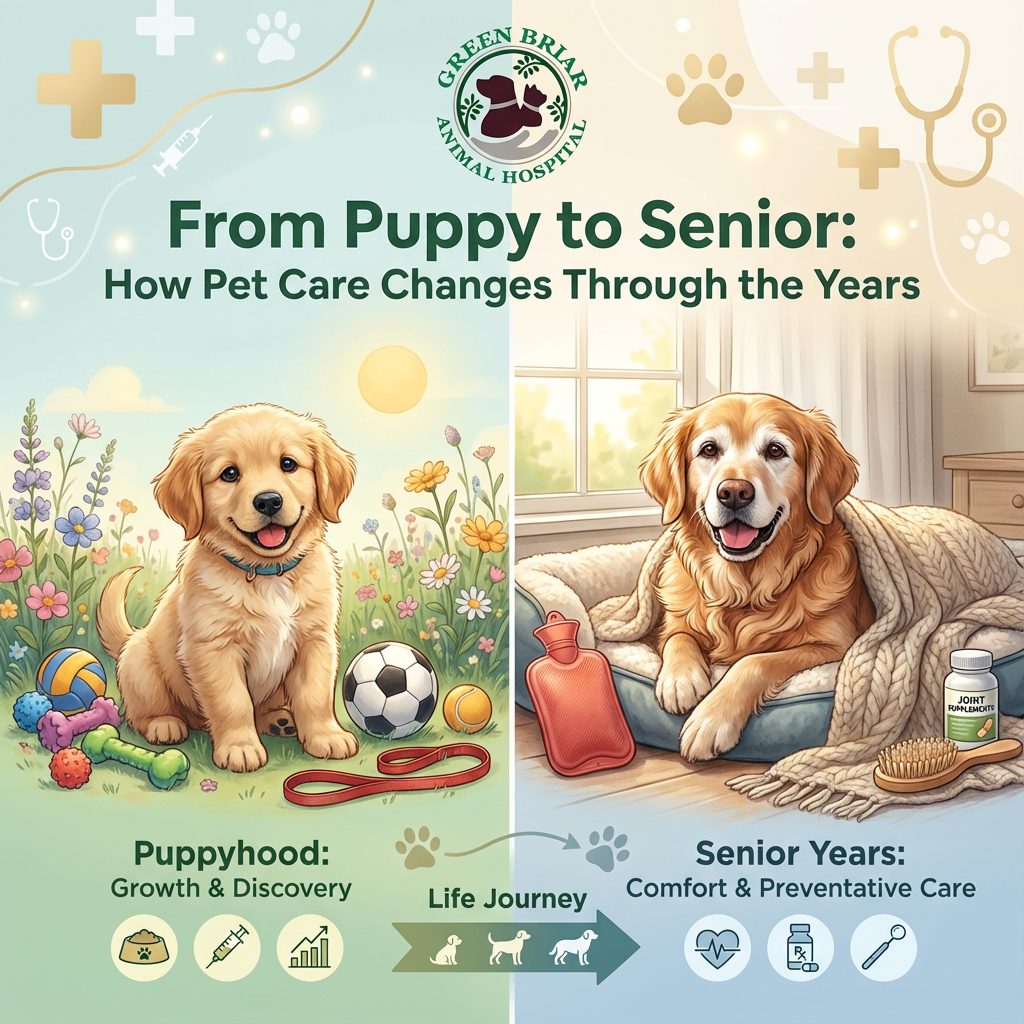
Every stage of your pet’s life brings new joys, challenges, and responsibilities. From the playful
energy of a puppy or kitten to the quiet wisdom of a senior companion, your pet’s needs evolve
as they age — and so should their care.
At Greenbriar Animal Hospital, we believe that understanding how your pet’s health changes
over time is the key to helping them live a long, happy, and comfortable life. Here’s a guide to
what your pet needs at every stage — and how you can support them through the years.
1. The Puppy and Kitten Stage: Building the Foundation (0–12 Months)
The early months of your pet’s life are full of excitement and rapid growth. This is the time to set
the stage for a lifetime of good health and positive habits.
Key areas of care:
• Vaccinations: Puppies and kittens need a series of vaccines to protect against dangerous
diseases like parvovirus, distemper, and feline leukemia.
• Parasite prevention: Fleas, ticks, and intestinal worms can affect young pets quickly.
Starting preventives early helps them grow strong and healthy.
• Nutrition: Feed a high-quality diet designed for growth and development. Puppy and
kitten formulas contain the right balance of calories, protein, and nutrients.
• Training and socialization: Early training builds confidence and reduces behavior
problems later.
• Spaying or neutering: Typically done around six months, this prevents unwanted litters
and reduces the risk of certain cancers and behavioral issues.
💡 Tip: Schedule monthly wellness visits during the first year to track growth, vaccinations, and
development milestones.
2. The Adolescent and Adult Stage: Maintaining Wellness (1–6 Years)
Once your pet reaches adulthood, maintaining their health becomes the focus. They’re full of
energy, but this is when hidden health issues can begin to appear.
Key areas of care:
• Annual exams: Regular checkups allow your veterinarian to catch early signs of illness
and monitor weight, heart, and dental health.
• Dental care: Start brushing teeth at home and schedule professional cleanings to prevent
gum disease.
• Exercise and mental stimulation: Daily walks, playtime, and enrichment toys help
maintain fitness and reduce anxiety or boredom.
• Nutrition: Switch to an adult formula suited to your pet’s breed, size, and activity level.
Avoid overfeeding — adult pets are prone to weight gain.
• Preventive screenings: Annual bloodwork and parasite testing keep your pet’s internal
health on track.
💡 Tip: This is the perfect time to discuss behavior, nutrition, and any subtle changes you’ve
noticed with your veterinarian.
3. The Mature Adult Stage: Watching for Subtle Changes (7–10 Years)
Pets are considered middle-aged around this time, though it varies by breed — larger dogs age
faster than smaller ones. You may notice your pet slowing down a bit or sleeping more, but they
still have plenty of life left!
Key areas of care:
• Bi-annual exams: Health issues such as arthritis, thyroid disease, and diabetes become
more common, so twice-yearly checkups are recommended.
• Diet adjustments: Consider senior or joint-support formulas that are lower in calories
and higher in fiber or omega-3 fatty acids.
• Joint care: Supplements like glucosamine can support mobility and comfort.
• Weight management: Keeping your pet at a healthy weight reduces stress on the heart
and joints.
• Dental health: Gum disease can worsen with age, leading to infections or tooth loss.
💡 Tip: Subtle changes — like increased thirst or slower movement — can signal early disease.
Catching these signs early can extend your pet’s quality of life.
4. The Senior Stage: Comfort and Compassion (10+ Years)
Senior pets are family members who have given us years of loyalty and love. At this stage, the
goal is to keep them comfortable, pain-free, and emotionally fulfilled.
Key areas of care:
• Senior wellness exams: Twice-yearly checkups with lab work help monitor organ
function, thyroid levels, and potential age-related illnesses.
• Mobility and pain management: Arthritis, muscle loss, and vision changes are
common. Your vet can recommend pain relief options and supportive therapies.
• Comfortable environment: Soft bedding, ramps, and non-slip mats help prevent
injuries.
• Mental stimulation: Gentle play, walks, and affection keep your pet mentally sharp and
happy.
• End-of-life planning: Difficult but important conversations about hospice care or
quality-of-life decisions should be had early, with compassion and support.
💡 Tip: Small changes — such as raised food bowls or orthopedic beds — can make a big
difference in your senior pet’s daily comfort.
A Lifetime of Love and Care
No matter your pet’s age, consistent veterinary care is the foundation of lifelong health.
Regular checkups, tailored nutrition, exercise, and lots of love help your furry friend enjoy every
stage to the fullest.
At Greenbriar Animal Hospital, our experienced team is here for every milestone — from that
first wag or purr to the golden years of companionship.
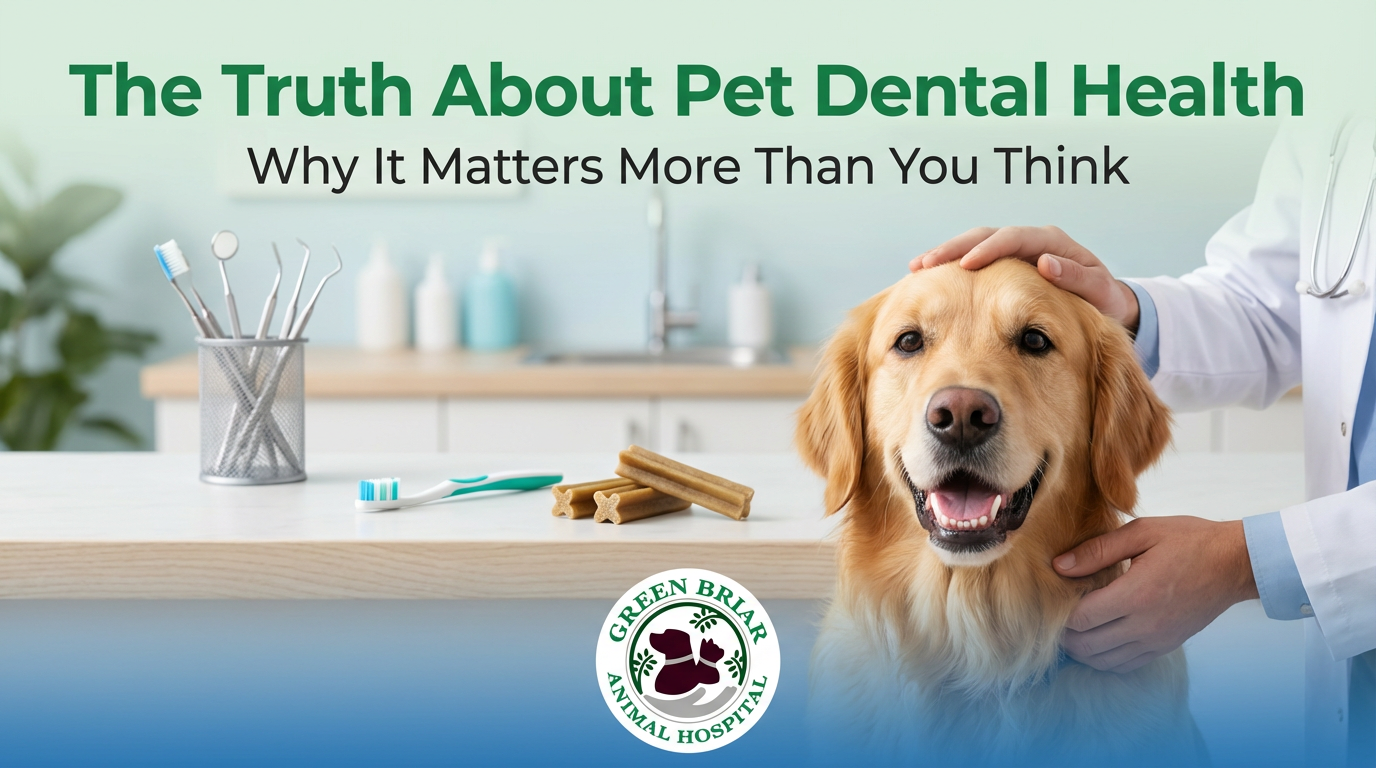
When most pet owners think about keeping their pets healthy, they imagine regular checkups,
vaccinations, or nutritious food — but dental health is often overlooked. What many don’t
realize is that your pet’s mouth is a window into their overall health. Poor dental hygiene can
lead not only to bad breath but also to pain, infection, and even life-threatening diseases.
At Greenbriar Animal Hospital, we’re passionate about helping pet parents understand just
how vital oral care is to a pet’s long-term wellness. Here’s the truth about pet dental health —
and why it deserves just as much attention as diet or exercise.
1. Dental Disease Is Extremely Common — and Often Hidden
Did you know that over 70% of cats and 80% of dogs show signs of dental disease by the age
of three? Unfortunately, most pets won’t show obvious symptoms until the condition is
advanced.
Because pets instinctively hide pain, what looks like “normal behavior” may actually be a sign of
discomfort.
Early signs of dental problems include:
• Bad breath (halitosis)
• Drooling or pawing at the mouth
• Difficulty chewing or dropping food
• Red, swollen gums
• Loose or missing teeth
If you notice any of these symptoms, it’s time to schedule a dental exam.
2. It’s More Than Just Bad Breath — It’s a Health Risk
Dental disease begins when plaque builds up on teeth and hardens into tartar. Over time, this
causes gingivitis (gum inflammation) and then periodontal disease, which destroys tissue below
the gumline.
Once bacteria enter the bloodstream through infected gums, they can travel to vital organs —
including the heart, liver, and kidneys — leading to serious complications.
That’s why regular dental care isn’t just cosmetic; it’s a critical part of preventive health.
3. Professional Dental Cleanings Make a Big Difference
While at-home brushing helps, professional cleanings are essential to fully protect your pet’s
oral health.
At Greenbriar Animal Hospital, our comprehensive dental cleanings include:
• A full oral exam under anesthesia for comfort and safety
• Removal of tartar and plaque above and below the gumline
• Polishing to smooth the tooth surface and reduce future buildup
• Digital dental X-rays to identify hidden disease
These cleanings allow our veterinary team to spot and treat problems long before they cause pain
or permanent damage.
💡 Tip: Most pets benefit from a professional cleaning once a year — sometimes more often for
smaller breeds or older pets.
4. Daily Dental Care at Home Is Easier Than You Think
Maintaining your pet’s dental health doesn’t stop at the vet’s office. Simple daily habits can
dramatically reduce the risk of dental disease.
Try these at-home care tips:
• Brush regularly: Use a pet-safe toothbrush and toothpaste (never human toothpaste!).
• Dental chews and toys: Choose products approved by the Veterinary Oral Health
Council (VOHC).
• Dental diets or treats: Some foods are designed to reduce tartar buildup.
• Regular checkups: Ask your vet to check your pet’s teeth and gums at every visit.
Starting a routine early — especially when your pet is young — makes dental care easier and
more comfortable for everyone.
5. Senior Pets Need Special Dental Attention
Older pets are at a higher risk for oral problems, including tooth decay and gum infections.
If your senior dog or cat develops bad breath, bleeding gums, or difficulty eating, don’t
assume it’s “just old age.” These can be signs of treatable dental disease.
Our veterinarians at Greenbriar Animal Hospital offer gentle, senior-friendly dental care
designed to keep your pet comfortable and healthy throughout their golden years.
6. Healthy Mouth, Happy Life
A healthy smile means more than fresh breath — it means a happier, more active pet. Pets with
clean teeth eat better, play more, and experience less pain and inflammation.
By investing in your pet’s dental care today, you’re giving them the gift of a longer, healthier life.
Protect Your Pet’s Smile Today
Your pet depends on you for everything — including their dental health. With regular checkups,
cleanings, and at-home care, you can help prevent painful disease and keep your furry friend
feeling their best.
At Greenbriar Animal Hospital, our team provides comprehensive dental exams, cleanings,
and personalized oral care plans to keep those tails wagging and purrs coming.
As loving pet owners, we all want our furry companions to live happy, healthy lives. But unlike
humans, pets can’t tell us when something’s wrong. Often, the earliest signs of illness are easy to
overlook — hidden behind small changes in behavior, appetite, or energy. Knowing what to
watch for can help you catch potential health issues early and get your pet the care they need.
At Greenbriar Animal Hospital, we believe that early detection is key to keeping pets healthy
and thriving. Here are five subtle signs your pet might not be feeling well — and when it’s time
to schedule a visit with your veterinarian.
1. Changes in Appetite or Drinking Habits
If your dog or cat suddenly loses interest in food or water — or starts consuming much more
than usual — it could indicate a medical issue.
• Loss of appetite may be a sign of dental pain, infection, or digestive trouble.
• Increased thirst can be linked to diabetes, kidney disease, or thyroid problems.
Keep track of your pet’s eating and drinking patterns and report any noticeable changes to your
vet.
2. Unusual Lethargy or Lack of Interest
Every pet has lazy days, but if your normally playful companion seems unusually tired,
withdrawn, or uninterested in their favorite activities, it’s worth paying attention. Lethargy can
be an early symptom of infections, metabolic disorders, or pain that’s not immediately visible.
3. Subtle Changes in Grooming or Coat Condition
Cats are typically meticulous groomers, so a messy or matted coat may indicate that your cat
isn’t feeling well enough to care for themselves. Similarly, dogs that start shedding excessively
or have dry, flaky skin could be dealing with allergies, nutritional imbalances, or thyroid issues.
A healthy coat is often a reflection of a healthy body.
4. Digestive Changes or Bathroom Habits
Even slight changes in your pet’s elimination habits can signal internal problems.
• Constipation or diarrhea might stem from dietary changes, infections, or intestinal
blockages.
• Straining to urinate can indicate urinary tract infections or stones — conditions that
require prompt attention.
Monitor litter boxes or outdoor bathroom behavior closely and seek veterinary care if
irregularities persist for more than a day or two.
5. Subtle Behavior or Mood Shifts
You know your pet better than anyone else, so trust your instincts. If your normally affectionate
cat is suddenly hiding more, or your cheerful dog seems unusually irritable, these could be signs
of discomfort or distress. Pain, anxiety, or neurological changes can all alter a pet’s temperament
in subtle ways.
When to Contact Your Veterinarian
If you notice one or more of these signs, don’t wait for them to worsen. Even minor changes can
point to underlying health concerns that are easier to treat early. At Greenbriar Animal
Hospital, our compassionate veterinary team is here to help you identify and manage health
issues before they become serious.
Your pet can’t tell you how they feel — but their body can. By staying observant and
proactive, you can give them the healthiest, happiest life possible.